Warning: opendir(/home/main/clients/wp-content/mu-plugins): Failed to open directory: Permission denied in /home/main/clients/wp-includes/load.php on line 981 Call Stack: 0.0001 358712 1. {main}() /home/main/clients/index.php:0 0.0002 359992 2. require('/home/main/clients/wp-blog-header.php') /home/main/clients/index.php:17 0.0003 369576 3. require_once('/home/main/clients/wp-load.php') /home/main/clients/wp-blog-header.php:13 0.0003 379600 4. require_once('/home/main/clients/wp-config.php') /home/main/clients/wp-load.php:50 0.0007 479560 5. require_once('/home/main/clients/wp-settings.php') /home/main/clients/wp-config.php:112 0.1661 29137192 6. wp_get_mu_plugins() /home/main/clients/wp-settings.php:498 0.1661 29137192 7. opendir($directory = '/home/main/clients/wp-content/mu-plugins') /home/main/clients/wp-includes/load.php:981 Warning: session_start(): Session cannot be started after headers have already been sent in /home/main/clients/wp-content/plugins/userpro/includes/class-userpro.php on line 222 Call Stack: 0.0001 358712 1. {main}() /home/main/clients/index.php:0 0.0002 359992 2. require('/home/main/clients/wp-blog-header.php') /home/main/clients/index.php:17 0.0003 369576 3. require_once('/home/main/clients/wp-load.php') /home/main/clients/wp-blog-header.php:13 0.0003 379600 4. require_once('/home/main/clients/wp-config.php') /home/main/clients/wp-load.php:50 0.0007 479560 5. require_once('/home/main/clients/wp-settings.php') /home/main/clients/wp-config.php:112 0.3407 62247192 6. do_action($hook_name = 'init') /home/main/clients/wp-settings.php:771 0.3407 62247568 7. WP_Hook->do_action($args = [0 => '']) /home/main/clients/wp-includes/plugin.php:522 0.3407 62247568 8. WP_Hook->apply_filters($value = '', $args = [0 => '']) /home/main/clients/wp-includes/class-wp-hook.php:365 0.5040 79475320 9. UserPro->init('') /home/main/clients/wp-includes/class-wp-hook.php:341 0.5040 79475320 10. session_start() /home/main/clients/wp-content/plugins/userpro/includes/class-userpro.php:222 Suriname – Getting Here - Wilderness Explorers | Notes for Travellers

Suriname – Getting Here

International Carriers & Routes

Getting to Suriname on name-brand international carriers is relatively simple from North America and Europe. Wilderness Explorers offers a full-service air booking facility with unmatched experience arranging long-and short- haul bookings. Let us know how we can help.

Caribbean Airlines (BWI) is Guyana’s flagship carrier and operates flights between Toronto (YYZ), New York (JFK), Miami (MIA) or London Heathrow (LHW) and Port of Spain, Trinidad (POS). From Trinidad BWI offers easy nonstop connections directly to Paramaribo (PBM).

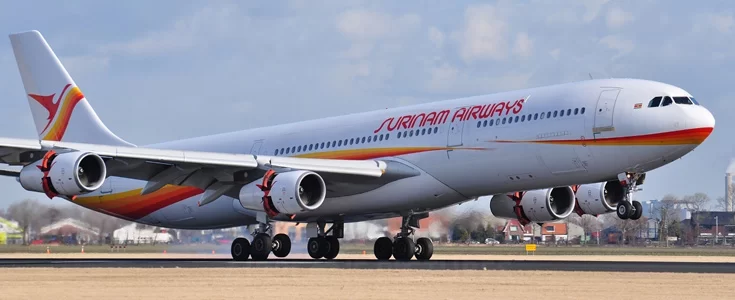
Surinam Airways (SLM) offers A340 service between Amsterdam (AMS) and Paramaribo, and also operates flights to Aruba (AUA), Curaçao (CUR), Georgetown and Miami (MIA). Passengers transiting to the US via either Aruba or Curacao will, interestingly, handle their US immigration formalities on the island rather than upon landing at MIA. Note! Wilderness Explorers can assist with your arrangements in the Netherlands Antilles if you want to make a beach/snorkel/scuba stopover on your way home.

SLM service between Paramaribo and Cayenne, French Guiana (CAY) isn’t bookable online but some flights between PBM and Belem, Brazil may make a stopover at Cayenne. Contact our office for details.

KLM operates daily 747 service between Amsterdam to Paramaribo.

Dutch Antilles Express (DAE) and Insel Air offer sporadic service between Aruba, Curacao, Bonaire (BON) and Paramaribo.

Airports

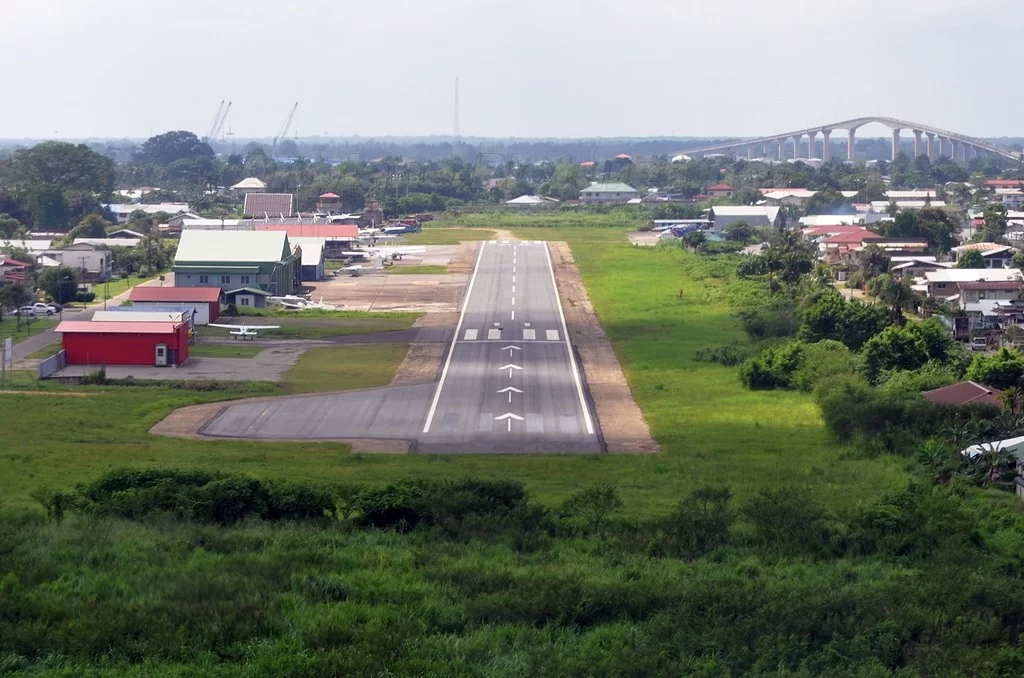
Overseas flights call at the small but modern Pengel International Airport (IATA: PBM, ICAO: SMJP), referred to locally as Zanderij. Drive time between the city centre and Zanderij can be one to two hours depending on traffic. Most regional and domestic flights operate out of the tiny Zorg en Hoop (IATA: ORG, ICAO: SMZO) municipal airstrip in the heart of Paramaribo. This facility’s operational record is spotless, but the runway is so short that guests could be forgiven for thinking their Cessna was landing across the tarmac rather than down its length!
Baggage

The baggage allowance on your international flight will be much greater than what you can carry once you arrive here since we rely on light aircraft, canoes, and 4WD vehicles for most of our journeys. Pack light! In a pinch, you may leave a few small items at our office, if necessary, to be collected upon departure.

Even though you may normally prefer wheeley-style suitcases, logistics in this part of the world are better suited to soft-sided luggage or duffle bags. They’re easier to stow on small air and water craft, and permit you to stuff one inside the other for extra storage should you need it. Tip: bring plenty of dry-bags to secure your electronics and delicate items: you and your bags will get wet.

Domestic Flights

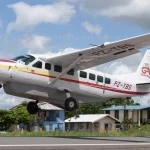
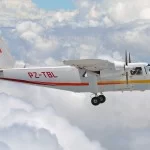
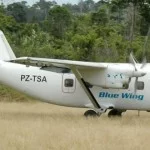
Our flights into the jungle employ reliable and safe – but small – single- and twin-engine craft such as the Cessna C206 (5-passenger), deHavilland Twin-Otter (7 passenger), Britten-Norman Islander BN2 (8 passenger) or Cessna Caravan (12-passenger) aircraft. Weight allowances in Suriname vary depending on the day of your travel and the type of aircraft assigned to your group, but they can be restrictive. You will be asked to stand on a scale with your bags and all accessories before being allowed to board the aircraft. There are no exceptions. Some flights may permit excess weight for a fee, however this may not always be an option due to strict payload limits. If you are concerned about your total body/luggage weight, contact us immediately so that an extra weight allowance may be reserved for you. For planning reasons, you will be asked to supply your body and luggage weight prior to travel.

Security

The Transportation Security Administration (TSA) is responsible for security screening operations at all U.S. airports. Because their rules change with some frequency, you are strongly advised to review current rules and restrictions at www.tsa.gov or by calling 866-289-9673. The European Aviation Safety Agency publishes security guidelines for European travellers.

Be prepared to pass through security checkpoints at connecting airports along your journey back to the United States which may enforce TSA and FAA restrictions on liquids, batteries, and sharp objects in your checked and carry on baggage. You may be screened even if you are only transiting through an airport (this is a frequent issue when connecting through Port Of Spain, Trinidad). Note that you can buy liquids at the Duty-Free shops in Paramaribo, but if your homeward flight makes a connection, those liquids will not be permitted in carry-on baggage for the connecting flight.

Caribbean Airlines flights that stop in Port of Spain enroute to the United States are obligated to deplane all passengers for an additional security check.

Arrivals

Your arrival at the relatively modern Pengel International Airport is unlikely to be lengthy or eventful. After completing arrival formalities, exit the building and look for a Wilderness Explorers representative holding a sign with your name on it. The floorplan is simple, the scene is relaxed, and the air conditioning reliable. You will encounter few hassles and no aggressive touts when exiting.

Zanderij airfield here has a long and storied history, serving as a Pan American World Airways stop early in the 20th century then becoming a major transport base for the Air Transport Command ferrying materiel to the African theater of World War II. (Read more)

Transfer to the Hotel

Pengel International Airport is inconveniently located 60+ minutes by road from Paramaribo centre. Upon arrival, our driver will take you directly to the hotel so you can freshen up and rest. Domestic flights use the centrally-located Zorg en Hoop airstrip, so – good news! – you probably won’t have to make this drive again unless you are flying back to the US or Europe from Paramaribo.

Travel Advisories