
A team consisting of two researchers from the Smithsonian Institution and three workers from the north Rupununi participated in a bird survey in the upper sections of the Rewa River. Our starting point for the expedition was the village of Annai where the parties met and began our journey by boat, first down the Rupununi River and then up the Rewa. Travel to our first camp took three days and involved long days in the boat and several portages around the large falls, beginning with Great Falls (Corona Falls). The water was very high at this time of year as you would expect at the tail end of the rainy season. Our guide, Ashley Holland, commented that very few people have ever traveled up the Rewa at this time of year, preferring the calmer waters of the dry season.
We made a base camp at what is referred to as Louie Camp, 02° 58.29’ N 58° 35.62’W (see Figure 1). This part of the river is rarely visited by people (Amerinidians, miners, or otherwise) and the quality of the forest and streams show it. Here we collected birds for 11 days in the seasonally flooded (varzea) forest near the river. See Table 1. for net hours. The map showed foothills, some reaching over 300m in elevation within a few miles of our camp and we cut line in that direction in search of terra firma, although we never reached the hills. Most of the species encountered at this site were typical of lowland forest in Guyana with just one exception. This bird was Trogon collaris (Collared Trogon) which is typically found in the foothills and mountains. We did not record any other species typically found in higher elevations. Other species of notable interest were Myiozetetes luteiventris, Hemitriccus josephinae, and large numbers of several species of parrots.
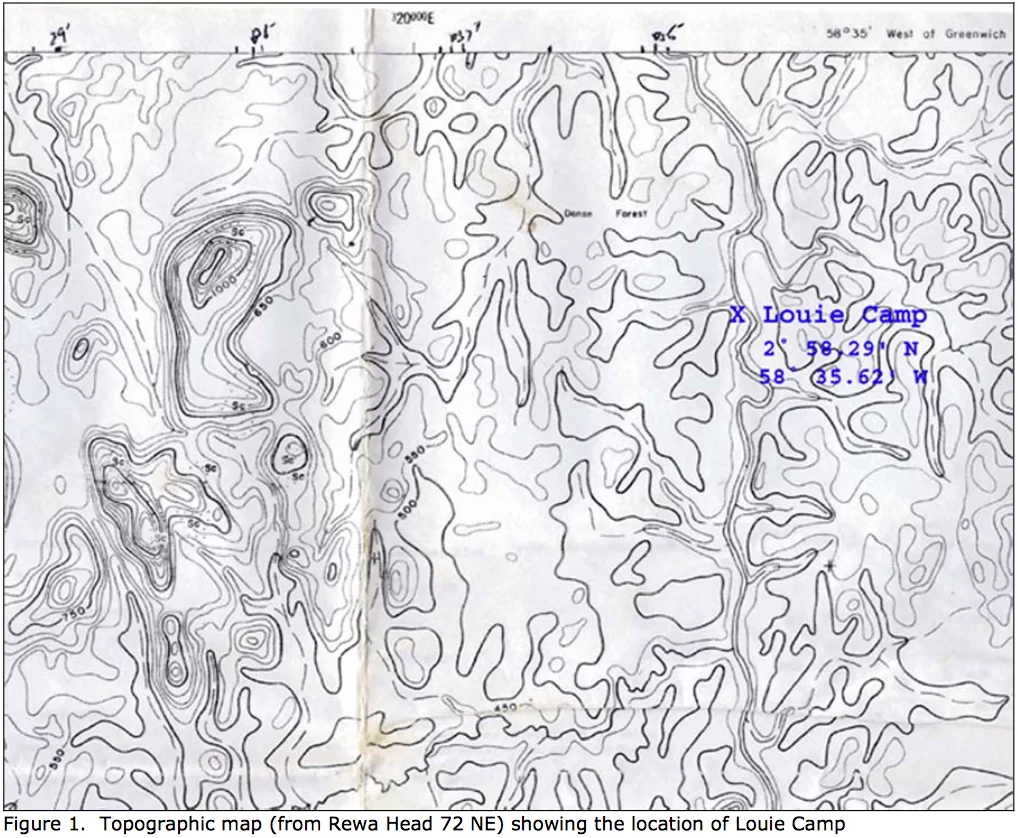
Figure 1. Topographic map (from Rewa Head 72 NE) showing the location of Louie Camp
August is not an ideal time to be in Guyana for bird surveys, as this is one of the quietest times of year with little breeding and consequently little vocalizations. Surveys done at other times of the year would produce more species of birds. I think it would be safe to assume that this part of Guyana has over 300 species of birds.
After 11 days, we moved our camp back down river, below the falls, to a place known as ‘fish pond’, 3° 34.79’N 58° 39.79’ W, ’ which is often used by the villagers from Rewa Village as a fishing spot during the dry season. Here we made another camp for 6 days (19 – 24 August). The seasonally flooded forest at this camp was similar to our first camp, but the river itself was bordered by a low scrub that had species typical of the river edge scrub found throughout the Rupununi. This camp was highlighted by a few species with limited ranges in Guyana and not known to go above the falls on the Rewa.
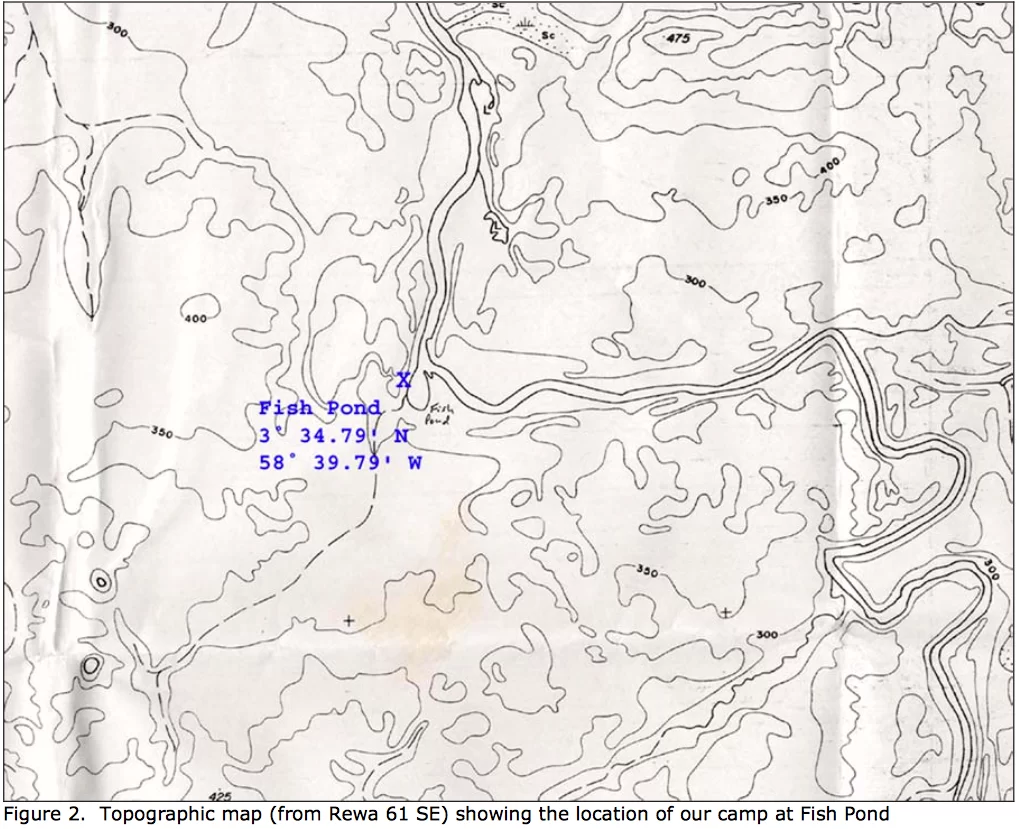
Figure 2. Topographic map (from Rewa 61 SE) showing the location of our camp at Fish Pond
The birdlife above and below the falls is quite different. There are several species of bird common below the falls that do not go above and vice versa. Some examples of species restricted to below the falls are Muscovy Duck, Crestless Curassow, Green Aracari, Dusky Parrot, Mealy Parrot, plus a whole host of others tied to the river edge scrub mentioned above. Other birds of notable interest are the Fasciated Tiger-Heron and Zigzag Heron which are very rare in Guyana and were only observed near the large falls and above.
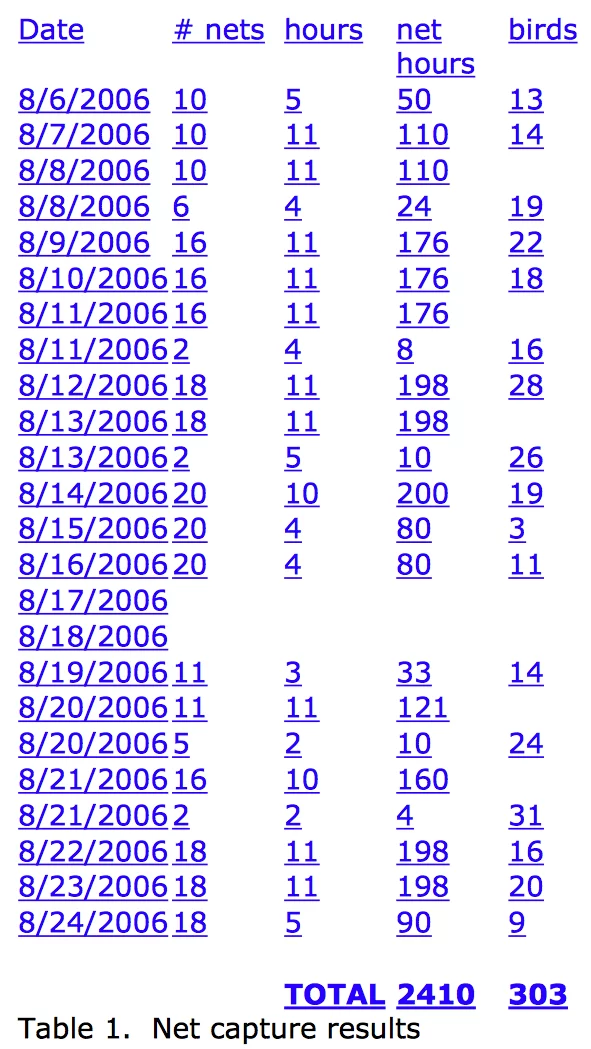
Table 1. Net capture results